Free Government iPhone in New York: Safe Lifeline, EBT, and Medicaid Options
New York residents can use Lifeline to cut down their phone or internet costs, and some providers out there may advertise free or discounted smartphones. But here's the thing — an iPhone is never a sure thing. The smartest move is to check your eligibility, scope out provider coverage, read the device terms, and understand the official Lifeline rules before you apply.
Quick answer
No verified, official statewide New York program hands every eligible resident a free iPhone. Lifeline is still running, ACP has ended, and SNAP or Medicaid can help prove eligibility. Whether you actually get an iPhone depends on the provider, your ZIP code, current stock, device condition, fees, shipping, activation, and the fine print on the service plan.
Lifeline Free iPhone is independent and informational only. This site does not provide phones directly, does not approve Lifeline applications, and does not ask for your EBT PIN, bank details, card number, or full Social Security number.
What this New York page covers
Use this page to get a realistic picture of what's actually available, what to check first, which documents might help you, and how to spot fake free government iPhone claims before they waste your time.
Quick Answer for New York Residents
If you live in New York and landed here searching for a free government iPhone, the honest answer is a lot more limited than the ads make it sound. Lifeline can help eligible households reduce what they pay for phone, internet, or a bundled plan. Some Lifeline-related providers might throw in a free or discounted smartphone — but an iPhone? That comes down to the provider's rules and what they actually have in stock.
EBT, SNAP, and Medicaid can each help you prove eligibility because they're common qualifying benefit programs. They don't create some separate New York iPhone entitlement on their own. A household with SNAP in Queens, Medicaid in Rochester, or SSI in Albany still has to get through the Lifeline eligibility process and then check which companies actually serve that ZIP code.
ACP is a different story altogether. The Affordable Connectivity Program ended when the funding ran dry, and households stopped getting ACP discounts after June 1, 2024. If you see a website in 2026 claiming ACP is still handing out new free iPhones in New York, treat that as a red flag.
What "Free Government iPhone" Means in 2026
The phrase "free government iPhone" gets thrown around a lot, but it's often misleading. The federal Lifeline program is mainly a service discount program. It helps qualifying households lower their monthly cost for phone service, internet service, or a bundled plan. It is not some federal Apple device giveaway.
In practice, the phone part usually comes from a participating provider. That provider may include a basic smartphone, a discounted phone, a refurbished device, or a promotional model with eligible service. Some ads do mention iPhones, but the actual offer might be limited to certain ZIP codes, certain inventory, a refurbished model, a copay, an activation fee, shipping restrictions, or a short promotion window.
That's why two New York residents can have the exact same SNAP or Medicaid status and end up with completely different device results. Someone in Manhattan may find way more provider choices than someone in Hamilton County or a remote Adirondack town. A person in Buffalo might see a totally different mix than a household on Long Island or in the Southern Tier.
Important: Don't trust any claim that every eligible New Yorker gets a brand-new iPhone, same-day approval, or guaranteed shipping. Check the provider's current terms before you submit anything.
Does New York Have a Free iPhone Program?
No verified official statewide New York program exists that guarantees a free iPhone to every eligible resident.
That said, New Yorkers still have real phone assistance options. The most common path is Lifeline, followed by device offers from specific providers. Public benefit programs like SNAP, Medicaid, SSI, housing assistance, veterans benefits, or qualifying Tribal programs can all help a household prove eligibility. Local digital access support, public libraries, and community action agencies can also help residents who need internet access to research providers or handle benefit-related tasks.
This distinction really matters. A safe New York application starts with eligibility, moves to provider availability, then looks at device terms. It does not start with some fake promise that a free iPhone is waiting for every EBT cardholder.
Main Ways New York Residents May Qualify
Most New York residents check Lifeline eligibility through income or participation in a qualifying program. The National Verifier or a participating provider may ask for proof if eligibility can't be confirmed automatically.
| Eligibility path | New York example | How it helps | Phone expectation |
|---|---|---|---|
| SNAP / EBT | New York Supplemental Nutrition Assistance Program through OTDA, with NYC households often using ACCESS HRA or SNAP Centers | Can help prove Lifeline eligibility | Does not guarantee an iPhone |
| Medicaid | New York State Medicaid through the NYS Department of Health and related enrollment channels | Can help prove Lifeline eligibility | Provider device terms still control |
| Income | Household income at or below the Lifeline income limit | Can qualify even without SNAP or Medicaid | Documents may be required |
| SSI | Older adults or disabled residents receiving Supplemental Security Income | Can be a qualifying program | Device depends on provider stock |
| FPHA / Section 8 | Public housing or rental assistance households, including NYCHA or local housing authority residents | Can support eligibility if accepted documents match | Name and address should match records |
| Veterans Pension or Survivors Benefit | Eligible veterans or surviving family members | Can be a qualifying program | Compare provider service terms carefully |
| Qualifying Tribal programs | Residents on qualifying Tribal lands in New York | May support Tribal Lifeline eligibility | Rules and benefit amounts may differ |
Household rule: Lifeline is generally limited to one benefit per household. Roommates can be separate households in some cases, but the household worksheet may be needed if people share an address.
EBT/SNAP Free iPhone Options in New York
New York's SNAP program — the Supplemental Nutrition Assistance Program — is handled at the state level by the New York State Office of Temporary and Disability Assistance, which most people know as OTDA. In New York City, a lot of SNAP tasks run through ACCESS HRA and SNAP Centers. Outside the city, residents typically work through their local department of social services.
If you receive SNAP and carry an EBT card, that can help prove your Lifeline eligibility. It does not mean the EBT card itself hands you a free iPhone. A provider still has to serve your ZIP code, accept your approved Lifeline status, and offer a device under whatever their current terms happen to be.
A common problem New York applicants run into is a mismatch between the name or address on their benefit record and what they put in the Lifeline application. This comes up a lot after a move, in multi-unit buildings, in NYCHA or subsidized housing, with rural route addresses, or when a benefit letter is using an older mailing address.
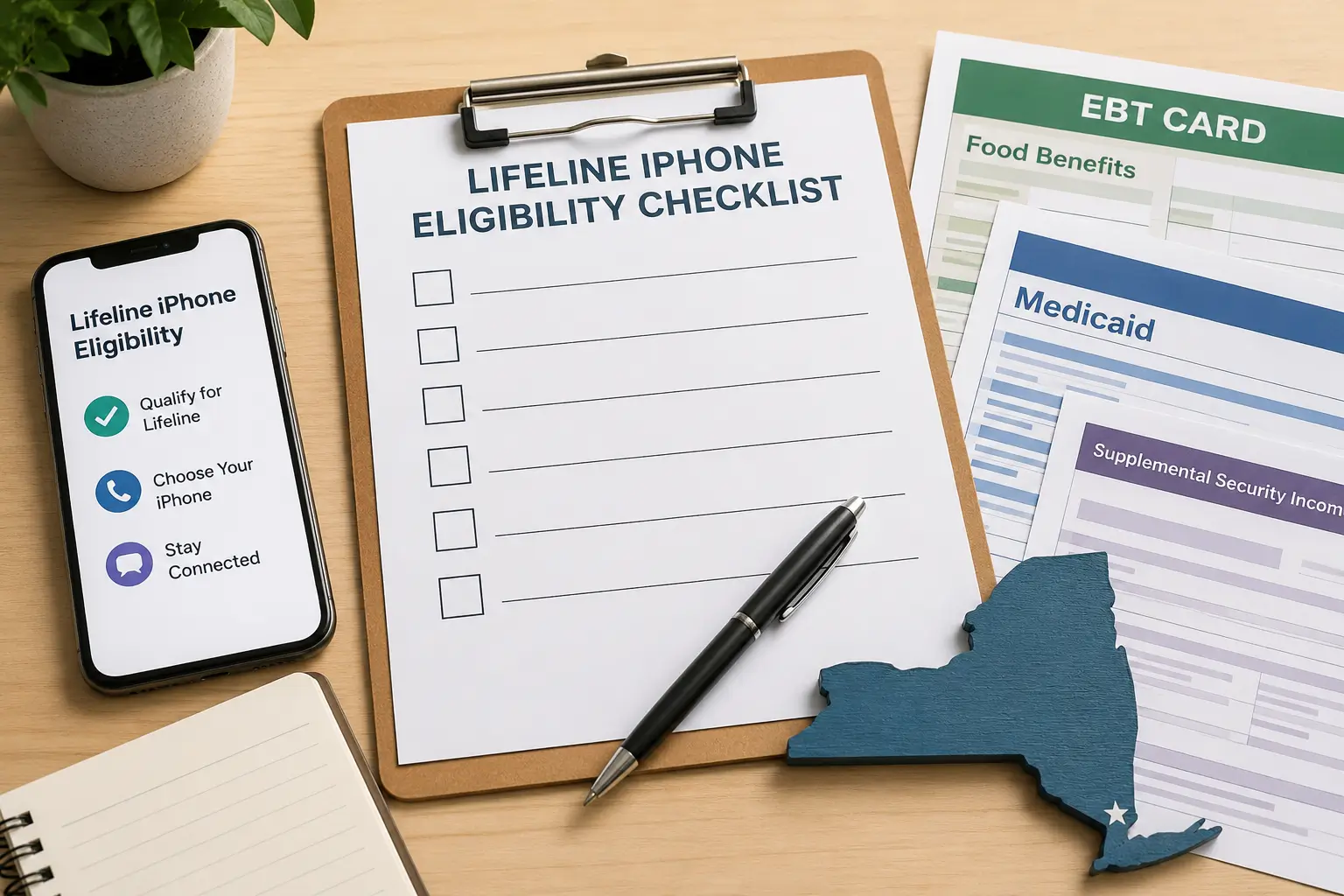
Medicaid Free iPhone Options in New York
New York State Medicaid can also support your Lifeline eligibility. The official Medicaid program is described by the New York State Department of Health. Depending on the household, Medicaid enrollment or management may go through NY State of Health, a local district, NYC systems, or a managed care plan.
Medicaid participation can get you in the door for Lifeline, but it doesn't guarantee an iPhone. A provider may ask for proof — something like a benefits letter, approval notice, current account screenshot, or another accepted document — if automated checks can't confirm your eligibility.
Watch out with Medicaid cards or managed care cards. Some providers or verifiers need proof that clearly shows active Medicaid participation, your name, and current information. If the document doesn't show enough detail, your application can stall until you send something clearer.
Lifeline iPhone and Free Phone Options in New York
Lifeline is the main federal phone assistance program New York residents need to understand. The FCC oversees it, USAC administers it, and the National Verifier handles eligibility checks in most cases.
The safe process is pretty straightforward: confirm eligibility, go through the official verification route, then search providers by ZIP code. The USAC Companies Near Me tool is genuinely useful because it shows Lifeline companies by ZIP code, city, and state. New York has a wide mix of dense metro areas and rural regions, so the same provider list won't always fit every household.
Provider ads often use phrases like "free government phone," "free 5G phone," or "free iPhone with EBT." Read the device terms before you get excited. Check whether the phone is new or refurbished, whether it's an iPhone or Android, whether there's a copay, whether shipping is included, and whether the monthly plan actually fits what you need.
Phone and Internet Access Issues Across New York
New York isn't one simple phone market. Residents in New York City, Buffalo, Rochester, Yonkers, Syracuse, Albany, Hempstead, Brookhaven, Islip, White Plains, New Rochelle, Mount Vernon, Schenectady, Utica, and Binghamton may all see different provider options because Lifeline availability gets checked by ZIP code.
Dense areas like the Bronx, Brooklyn, Queens, Manhattan, Staten Island, Long Island, Westchester, and parts of the Capital Region may show more provider listings — but that still doesn't mean iPhone stock exists. Rural and lower-density areas in the Adirondacks, Catskills, North Country, Southern Tier, Finger Lakes, Mohawk Valley, and parts of Western New York often face fewer provider choices, shipping limits, weaker mobile coverage, or fewer local support offices.
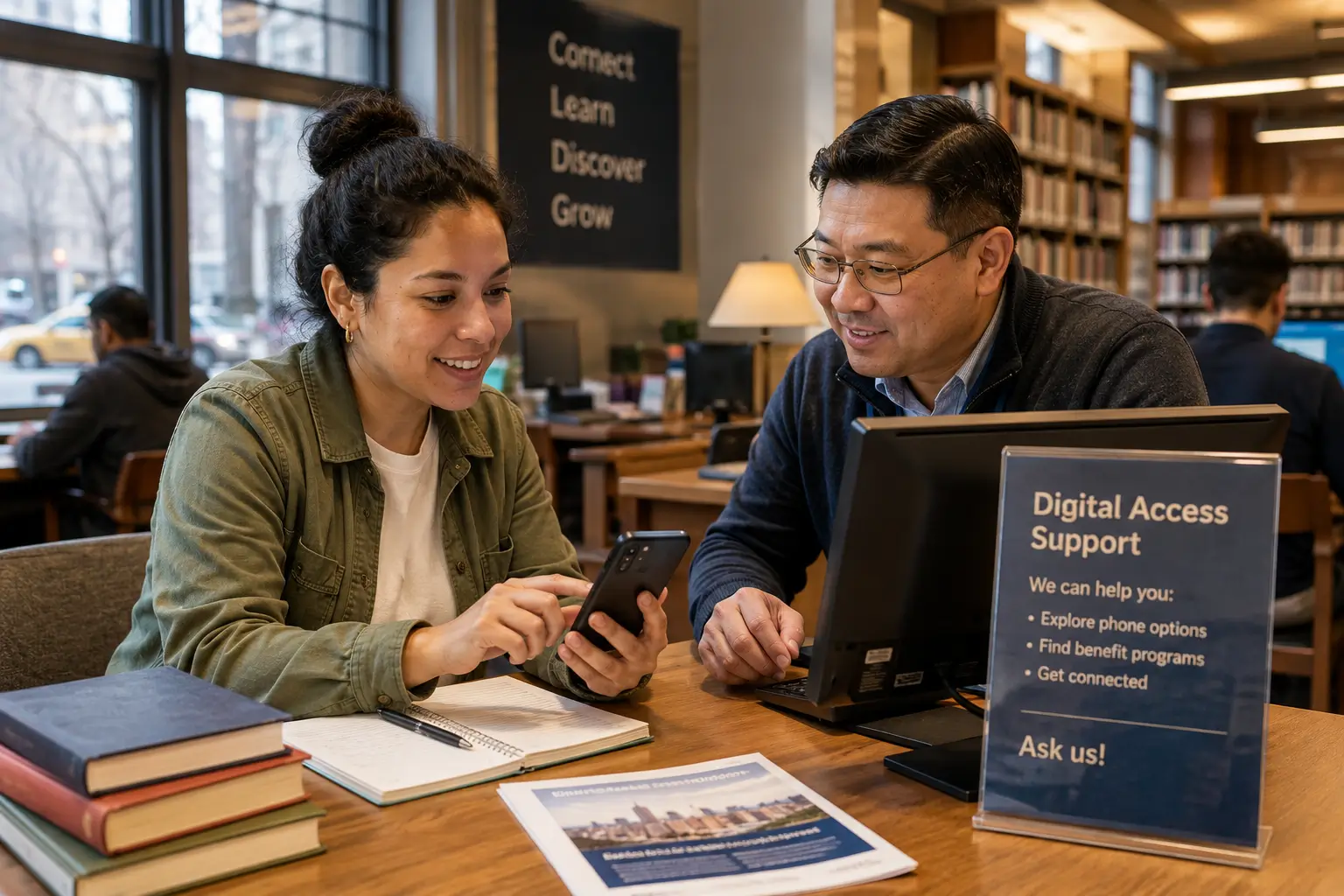
ConnectALL is New York's broadband and digital equity office. Public libraries also play a big role — many New Yorkers rely on library computers, Wi-Fi, printers, and staff support when they need to check benefits, compare providers, or print documents. The NY State Library public library finder has library information and even shows 24/7 Wi-Fi status for some locations.
For residents with disabilities, New York's TRAID program can connect people to assistive technology resources. Community action agencies can also help low-income households that need local support with documents, benefits, housing issues, transportation barriers, or internet access.
Safe Path to Check Lifeline iPhone Options in New York
This is the safer order to follow. It keeps you away from fake iPhone promises and helps you compare what providers are actually offering.
Confirm eligibility
Check SNAP, Medicaid, SSI, income, housing, veterans, or qualifying Tribal eligibility.
Use official Lifeline steps
Use Lifeline Support, National Verifier, or a legitimate participating provider.
Search by ZIP code
Provider availability can differ between NYC, Long Island, Upstate, and rural counties.
Compare devices
Check iPhone stock, Android backup options, 5G support, refurbished condition, fees, and shipping.
Apply safely
Apply only through official Lifeline channels or a provider you can verify.
Avoid scam claims
Never share your EBT PIN, bank details, or card number for a phone offer.
Documents You May Need
Not every application needs extra documents. If your eligibility can't be confirmed automatically, you may need to upload or send proof. Get your documents together before you apply so your New York application doesn't stall over a mismatch.
| Document type | Examples | New York issue to watch |
|---|---|---|
| Identity | State ID, driver license, passport, or other accepted proof | Name should match the benefit or Lifeline application |
| Address | Lease, utility bill, benefits letter, official mail | Apartment number, borough, rural route, or PO Box details should be clear |
| Benefit proof | SNAP approval, Medicaid proof, SSI letter, housing assistance proof | Document should show your name and current participation |
| Income proof | Pay stubs, tax return, unemployment statement, benefit statement | Use recent documents that match the household applying |
| Household worksheet | Lifeline household worksheet if multiple people share one address | Common in shared apartments, room rentals, and family housing |
| Tribal documents | Accepted proof for qualifying Tribal programs or qualifying Tribal lands | Only applies where Tribal Lifeline rules fit the household |
Apply Now in New York, Safe Guided Path
This section is not an application form. Lifeline Free iPhone is informational only and does not collect sensitive personal data. Use these checks to figure out your next step before going through an official Lifeline channel or a verified provider.
Eligibility pre-check
Do you have SNAP, Medicaid, SSI, income eligibility, housing assistance, veterans benefits, or qualifying Tribal eligibility?
Document readiness
Do your name, address, apartment number, and benefit proof match your application details?
ZIP code check
Search providers by ZIP code because New York options differ by borough, county, city, and rural area.
Device expectation
Check whether the offer is iPhone, Android, refurbished, 5G, paid, shipped, or limited by stock.
Approval and iPhone stock are not guaranteed. Do not submit an EBT PIN, bank account, card number, or payment to anyone who claims they can "unlock" your approval.
Provider Availability and ZIP Code Checks
ZIP code checks matter in New York because provider coverage and device offers can shift significantly inside the same state. A company may serve parts of New York City but not offer the same phone choice in a rural county. Another provider may list service statewide but only have certain device stock for certain areas or enrollment channels.
Before you apply, compare monthly service, talk and text, data, hotspot rules, activation, shipping, copay, phone condition, return policy, replacement policy, and recertification requirements. If the provider mentions an iPhone, look for the exact model, condition, stock limits, fees, and whether Android phones are the default backup when iPhones run out.
Provider pages such as AirTalk Wireless or Assurance Wireless may help you understand how different providers present device offers, but the final New York availability has to be checked through current provider terms and ZIP code search.
What To Do If No iPhone Offer Is Available
If you qualify for Lifeline but can't find a real iPhone offer in your New York ZIP code, don't force a risky application through a suspicious website. A smarter option may be to accept a Lifeline service discount or a basic smartphone first, then upgrade later if a better device offer shows up.
- Compare Android smartphone offers instead of waiting on an iPhone that may not be in stock.
- Check free 5G government phone options if data speed and newer network support matter more to you than the Apple brand.
- Consider buying a low-cost refurbished iPhone separately if Lifeline service savings make that affordable.
- Use public library computers or Wi-Fi to compare providers and print documents.
- Check ConnectALL and local digital equity resources for broader internet access support.
- Contact a community action agency if you need help with local benefits or document barriers.
- Check TRAID if your need is disability-related and assistive technology support might fit better.
- Avoid suspicious "approval fees," social media-only sellers, and anyone asking for your EBT PIN.
Special Groups in New York
Seniors
New York seniors may qualify through Medicaid, SNAP, SSI, income, or certain housing benefits. Many seniors need clear device terms more than hype — especially if they need a simple phone, large screen, or stable service. See free iPhone options for seniors.
Families with EBT
SNAP households in NYC, Long Island, Buffalo, Rochester, Syracuse, Albany, and smaller counties can use SNAP proof for eligibility, but the device still depends on what providers are offering. Keep your benefit letters current and protect your EBT PIN.
Rural residents
Residents in the North Country, Adirondacks, Catskills, Southern Tier, and rural Western New York may have fewer provider choices or weaker mobile coverage. Compare network coverage before you fixate on the phone model.
Medicaid households
Medicaid can support Lifeline eligibility, but a managed care card may not always be enough if it doesn't clearly show current participation. Use accepted proof when a provider or verifier requests it.
Veterans
Veterans Pension and Survivors Benefit can support eligibility. Veterans should compare service reliability, support access, and replacement rules before settling on a provider.
People with disabilities
Lifeline may help with phone service, while TRAID and library resources may help with assistive technology, devices, or internet access needs that go beyond a standard smartphone.
Scam Warnings for New York Residents
Phone assistance scams often target people already stretched thin by rent, food, medical, or internet costs. Be careful if an ad or agent makes this sound too easy.
- "Guaranteed free iPhone today" claims.
- Fake government logos or fake approval stamps.
- New ACP enrollment claims after ACP ended.
- Requests for your EBT PIN.
- Requests for bank or card details to "release" a phone.
- Pay-first approval claims.
- Social media-only sellers with no verified provider website.
- Fake tracking numbers before real approval.
- Guaranteed iPhone 13 claims without clear stock or terms.
- WhatsApp or Telegram-only agents.
- Copied provider names or misspelled brand names.
- Websites that hide contact information or avoid Lifeline terms.
Helpful Checklist Before You Apply
Run through this checklist before entering personal information on any provider website.
- Confirm benefit or income eligibility.
- Check whether another person in your household already uses Lifeline.
- Gather identity, address, benefit, or income proof.
- Make sure your name and address match across documents.
- Search providers by New York ZIP code.
- Read device terms before expecting an iPhone.
- Check whether Android is the backup option.
- Protect your EBT PIN, SSN, bank details, and card details.
- Save provider confirmation emails or application numbers.
- Watch for recertification notices if approved.
FAQs About Free Government iPhones in New York
Can I get a free government iPhone in New York?
Maybe, but it's not guaranteed. New York residents may qualify for Lifeline service through SNAP, Medicaid, income, or other qualifying programs, but iPhone availability depends on provider offers, ZIP code, stock, fees, and device terms.
Does New York EBT give me a free iPhone?
No. New York SNAP or EBT can help prove Lifeline eligibility, but it doesn't automatically get you an iPhone. You still need to get through Lifeline approval and check what device the provider is actually offering in your area.
Can Medicaid help me get a Lifeline phone in New York?
Yes. New York State Medicaid can support Lifeline eligibility. The phone you receive — if any — depends on the provider serving your ZIP code and that provider's current device terms.
Is Lifeline still active in New York?
Yes. Lifeline is still active and can lower the monthly cost of eligible phone, internet, or bundled service. It's separate from ACP.
Did ACP end for New York residents?
Yes. ACP ended after the program ran out of additional funding, and households stopped receiving ACP discounts after June 1, 2024. Be careful with websites still claiming new ACP iPhone approvals.
Are iPhones guaranteed through Lifeline in New York?
No. Lifeline eligibility doesn't guarantee an iPhone. Many providers offer Android smartphones more often, and iPhone offers may be refurbished, limited, paid, or simply unavailable.
What if only an Android phone is available?
An Android phone may still be exactly what you need if it gives you reliable calling, texting, data, and access to benefits, work, school, telehealth, and family contacts. You can also compare free 5G phone options or buy a refurbished iPhone separately down the road.
Can New York seniors qualify for a free or discounted phone?
Yes, many seniors may qualify through SNAP, Medicaid, SSI, income, or housing assistance. The best device comes down to provider stock, coverage, screen size, ease of use, and monthly service terms.
Do rural New York residents have fewer Lifeline choices?
Sometimes. Rural areas in the Adirondacks, North Country, Catskills, Southern Tier, and parts of Western New York may have fewer provider choices or different network coverage than major metro areas.
Do New York City residents get better iPhone offers?
New York City residents may see more provider choices because of ZIP code density, but that doesn't guarantee iPhone stock. Always compare the actual device, plan, fees, and shipping terms before you apply.
What documents might I need in New York?
You may need proof of identity, address, benefit participation, income, or household status. Make sure your name, apartment number, borough, county, and mailing address are consistent across everything you submit.
How can I avoid New York free iPhone scams?
Avoid anyone who promises guaranteed approval, asks for your EBT PIN, requests bank details, uses fake government logos, claims ACP is still issuing new discounts, or sells through social media only.
Final Helpful Summary
A free government iPhone in New York isn't guaranteed, but Lifeline can still help eligible households lower their phone or internet costs. SNAP, Medicaid, SSI, income, housing assistance, veterans benefits, and qualifying Tribal programs may all support eligibility. The safe path is to verify eligibility, search providers by ZIP code, compare phone terms, and walk away from fake iPhone promises.
External Resources
Use official sources when checking eligibility, documents, and local New York resources.